







AI consulting for small businesses costs $100 to $300 an hour, with readiness assessments at $2,000 to $8,000. It pays off when calls or estimates are already slipping and you can test one process for 30 to 60 days. Skip it when your phones are covered and every quote gets a follow-up.
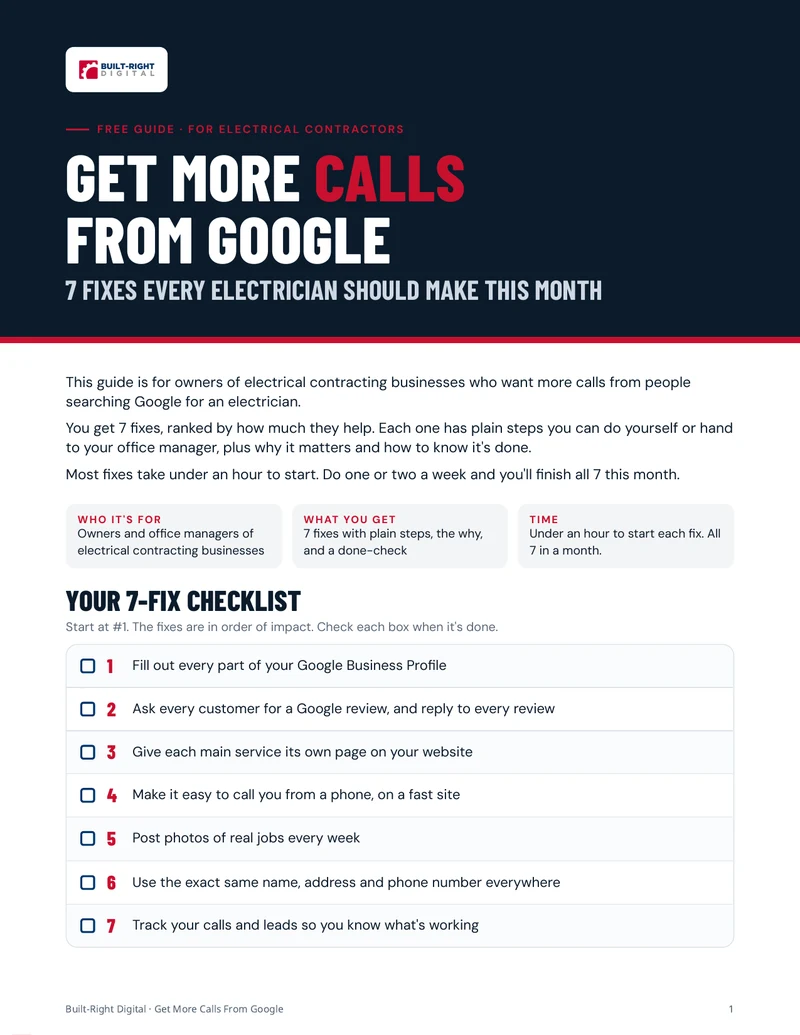
This guide is for roofing, plumbing and electrical owners. It takes about an hour to run the fit test and price your missed work. The first paid step usually costs $2,000 to $8,000. Start with one process, not five.
Built by the team at a home services marketing agency that tracks every call for its clients.
Key takeaways
- AI consulting costs $100 to $300 an hour. An assessment runs $2,000 to $8,000, and a fixed-scope build runs $2,500 to $50,000, based on published ranges.
- A focused pilot runs 30 to 60 days, and you need a 30-day baseline first or you cannot prove it worked.
- Roofing, plumbing and electrical companies usually start with call handling and estimate follow-up, because a missed call is a lost job.
- Skip a consultant when your schedule is full for 2 months. Skip it too when no one owns the task or you cannot export call data.
Fix call tracking and follow-up before you pay anyone to add AI on top.
What does an AI consultant do for a small business?
An AI consultant finds a repeated task in your business, picks one to test, sets it up, and measures the result against a baseline. For a home service company that task is usually answering calls, following up on estimates or reporting which ads booked jobs. A good engagement ends with a decision, not a slide deck.
Consulting firms describe the work in five stages. Published ranges put the assessment at one to four weeks and a narrow pilot at three to eight weeks.
- Assessment1 to 4 weeks
- First processPick one
- Pilot30 to 60 days
- RolloutTrain the crew
- IterationMonthly review
Is a roofing, plumbing or electrical company a small business for AI?
Yes. Most roofing, plumbing and electrical companies count as small businesses under the SBA’s size standards. That matters because consultants priced for enterprise teams will quote you work you do not need.
A home service business also has an edge. Your data is simple: calls, estimates, jobs and ad sources. That makes one clean pilot easier than it is for a company with ten systems.
What do you need before hiring an AI consultant?
You need one task that passes four tests. It happens often, the steps are written down, the data can be exported, and one person owns it. Run the test on the process that loses you the most jobs.
Frequency
Pass: it happens every week.
Fail: it happens a few times a year.
Written steps
Pass: you can list the steps on one page.
Fail: it lives in one person’s head.
Exportable data
Pass: calls, leads and jobs export from your phone, CRM or ads account.
Fail: leads sit in notebooks.
Named owner
Pass: one person has time every week.
Fail: everyone and no one owns it.
How do you start with AI consulting in 6 steps?
Start by pricing the work you already lose, pick one process, measure it, run a short pilot and write the stop rule before you begin. Each step below ends with a checkpoint and a mistake to avoid.
Price your missed work
Count last month’s missed calls and cold estimates, then multiply by your average job value and close rate.
- Pull the call log from your phone provider or CallRail.
- Count estimates sent with no reply after 7 days.
- Multiply each count by average job value and your close rate.
Pick one process
Choose the process where a lost lead costs the most and the steps are already written.
- Roofers: follow-up after inspections and estimates.
- Plumbers: after-hours call capture for emergencies.
- Electricians: reminders on panel, EV charger and rewire quotes.
Set a 30-day baseline
Record three numbers for 30 days before any tool goes live.
- Share of calls answered or returned the same day.
- Minutes to the first reply on a new lead.
- Share of estimates that turn into booked jobs.
Run a 30 to 60 day pilot
Test one tool on one phone line, one crew or one service area.
- Review results every week for 15 minutes.
- Route pricing and complaints to a person.
- Log every wrong reply the tool gives.
Decide: scale, change or stop
Write the stop rule before the pilot starts, then follow it.
- Set a threshold, such as “response time cut in half by day 45”.
- Scale if you beat it, change one thing if you miss it, stop if it fails twice.
Assign an owner and a monthly review
Give one person the tool, the numbers and 30 minutes a month to review them.
- Check the invoice for usage fees and extra seats.
- Re-run the baseline numbers every month.
Get the free contractor marketing guide
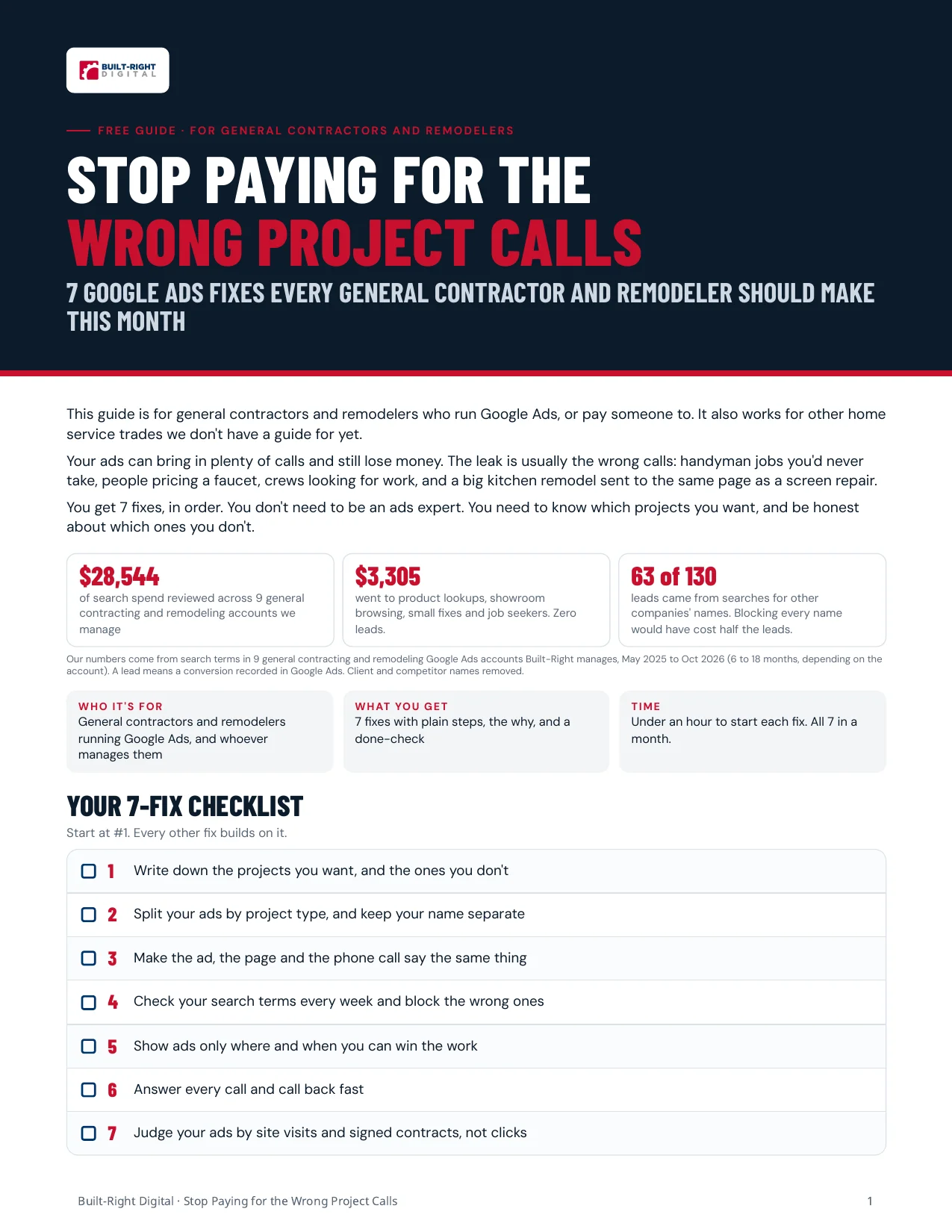
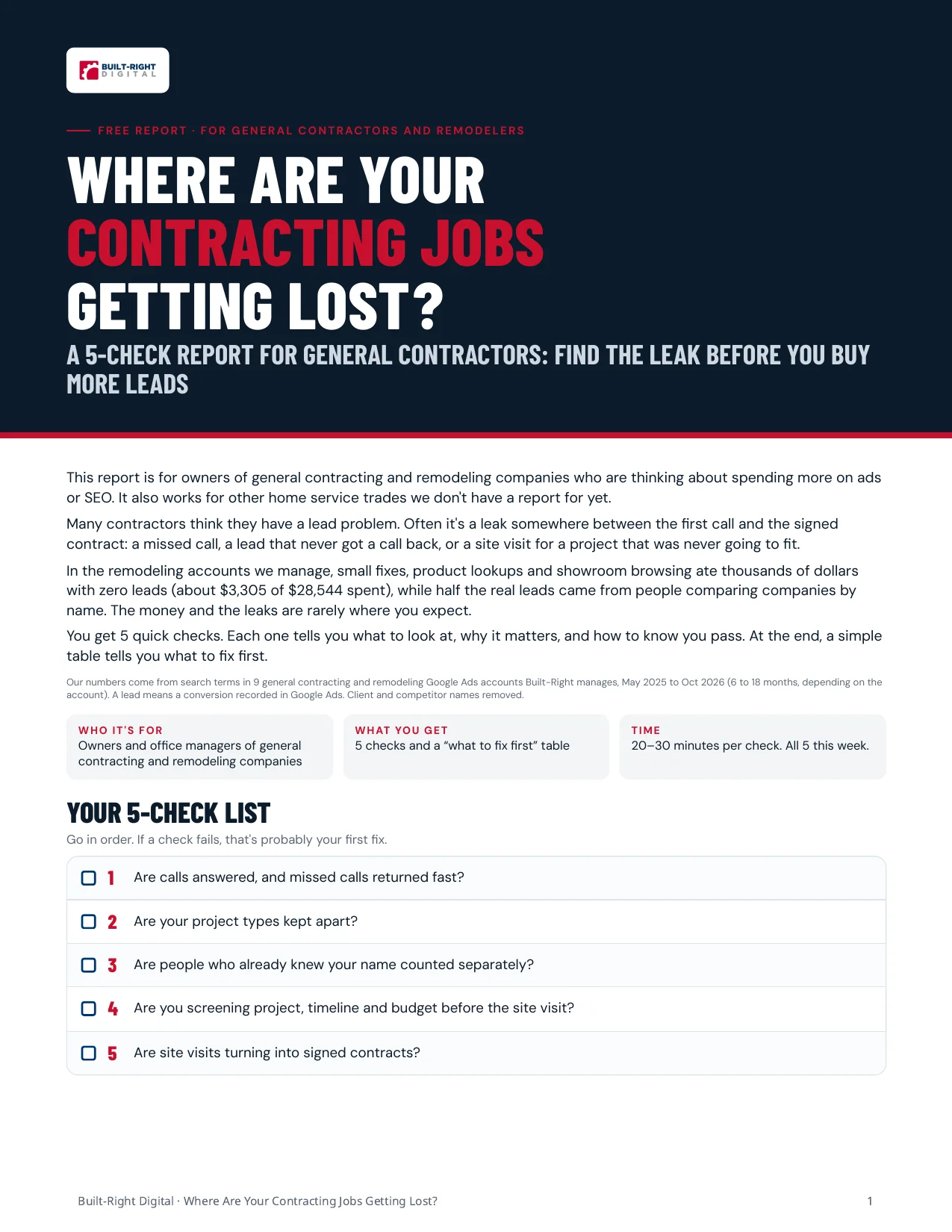
Get practical marketing steps to bring in better leads with the free Built-Right guide.
Get the free guideHow much does AI consulting cost for a small business?
AI consulting costs $100 to $300 an hour for advice, $2,000 to $8,000 for a readiness assessment and $2,500 to $50,000 for a fixed-scope build. Retainers run $1,500 to $8,000 a month. These are market ranges from Kanerika’s small business guide, not Built-Right Digital pricing.
Price ladder, higher blocks mean more scope, not a fixed scale. Ranges from Kanerika, October 2026.
| Engagement | Typical range | Best for | Watch for |
|---|---|---|---|
| Hourly advice | $100 to $300 per hour | One question or a second opinion | Hours that never end in a decision |
| Readiness assessment | $2,000 to $8,000 | You do not know where to start | A report with no pilot attached |
| Fixed-scope build | $2,500 to $50,000 | One process that passed the fit test | Scope that grows after you sign |
| Monthly retainer | $1,500 to $8,000 | Several processes over a year | Paying for hours you do not use |
| Software seats | $20 to $50 per user per month | Simple tasks you run yourself | Usage fees on top of seats |
Other firms quote a wider spread. RapidDev’s pricing breakdown lists hourly advice up to $500 and assessments up to $10,000. Ask for the scope in writing before you compare quotes.
The payback test
Months to payback equals your total first-year cost divided by the monthly saving. Under 12 months, go ahead. Over 12, shrink the scope. If a $6,000 build wins back $600 a month in booked jobs, payback is 10 months.
Costs that hide
Software subscriptions, usage fees, staff time for training and the hours your owner spends in review. Add them to the first-year cost before you divide.
For comparison, our marketing pricing plans run on a flat monthly retainer, with SEO and Google Ads starting at $999 a month.
When should you skip an AI consultant?
Skip a consultant when a $20 to $50 subscription solves the task. Skip it when no one owns the process or call tracking is missing. Hire help when you have a clear loss, exportable data and an owner.
Hire help if
- Calls come in but you cannot tell which ads or pages caused them.
- Big estimates go cold with no follow-up.
- Staff spend hours copying data between phone, CRM and calendar.
- Your own tool attempts stalled after two weeks.
Skip it if
- Your schedule is full for the next 2 months.
- No one has time to own the pilot.
- You cannot export your calls or leads today.
- The real gap is a missing service page or untracked ads.
If the last item sounds familiar, start with SEO services and Google Ads management that track every call, then revisit AI in six months.
What should a roofer, plumber or electrician automate first?
Roofers should start with estimate follow-up, plumbers with after-hours call capture, and electricians with quote reminders. Each trade loses jobs in a different place, so the first pilot differs. In every case, AI handles speed and repetition and a person handles pricing, safety and judgment.
- First pilot
- Follow-up after inspections and estimates.
- AI handles
- Reminder texts, missed-call replies, sorting lead spikes after a storm.
- A person handles
- Roof pricing, insurance talk and the inspection.
- First pilot
- After-hours call capture and booking.
- AI handles
- Answering after hours, collecting the address and the problem, offering open slots.
- A person handles
- Diagnosis, emergency pricing and dispatch calls.
- First pilot
- Reminders on panel, EV charger and rewire quotes.
- AI handles
- Follow-up after the estimate and booking confirmations.
- A person handles
- Pricing, load calculations and code questions.
Working in another trade? See the roofing company marketing, plumbing company marketing and electrician marketing pages for how we track leads in each.
How do you know AI is working?
Track five numbers against your 30-day baseline: reply speed, answer rate, estimate-to-booked rate, hours saved and cost per booked job. If three of five beat the baseline for four weeks in a row, the pilot works. The targets below are Built-Right Digital rules of thumb, so swap in your own baseline.
What goes wrong in a small business AI pilot?
Most pilots fail for people and data reasons, not because of the tool. The table lists the five problems we see most and the fix for each.
| Problem | Cause | Fix |
|---|---|---|
| No visible change | No baseline was set | Record 30 days of numbers, then restart the pilot |
| Staff ignore the tool | No owner | Name one owner and hold a 15-minute weekly review |
| Leads duplicate or vanish | CRM fields do not match | Map the fields between phone, form and CRM before launch |
| Costs creep up | Usage fees and extra seats | Cap usage and read the invoice monthly |
| Customers get wrong answers | No human check on pricing | Route quotes, pricing and complaints to a person |
Turn AI into booked home service jobs
Tell us where jobs slip through and we will tell you what to fix first.
Contact usAI consulting for small businesses FAQ
How much does AI consulting cost for a small business?
AI consulting costs $100 to $300 an hour for advice. A readiness assessment runs $2,000 to $8,000, and a fixed-scope build runs $2,500 to $50,000. Retainers run $1,500 to $8,000 a month. These are market ranges from vendor pages, not Built-Right Digital pricing.
What does an AI consultant do?
An AI consultant finds repeated tasks that software can handle, picks one to test, sets up the tool and measures the result. For a roofing company that usually means call handling or estimate follow-up. A good consultant leaves you with a baseline, a pilot result and a decision.
What is the 10-20-70 rule for AI?
The 10-20-70 rule, popularized by Boston Consulting Group, splits AI project effort three ways. About 10 percent goes to algorithms, 20 percent to technology and data, and 70 percent to people and process change. For a small home service business, the owner and the workflow matter more than the tool.
Can I use ChatGPT myself instead of hiring a consultant?
Yes, for simple tasks. A subscription of $20 to $50 per user a month can draft replies or summarize calls. Hire help when the work touches your CRM, phones or scheduling, or when your own attempts stalled. Run the four-question fit test first: frequency, written steps, exportable data and an owner.
How long does an AI project take for a small business?
A focused pilot usually runs 30 to 60 days. Published consulting ranges put assessments at one to four weeks and narrow builds at about three to eight weeks. Plan on another month for staff to adopt the tool. Complex multi-system projects take several months, so keep your first one small.
Can AI consulting help a roofing company?
Yes, when leads already come in and some get lost. Roofing companies usually gain most from call handling, estimate follow-up and tracking which ads book jobs. Storm-season spikes make missed calls expensive. If your phones are covered and every estimate gets a follow-up, wait and fix other gaps first.
What should I ask before hiring an AI consultant?
Ask what they built and shipped, how they will measure it, and who owns your data and accounts. Ask what happens if you leave and which software costs continue. Walk away from pitches with no baseline, no pilot and no written stop rule. Get the scope and price in writing.
Final advice: track first, add AI second
Most small home service businesses get more from tracked calls and a fast follow-up than from a new AI tool. Our Meta Ads management and SEO work all run on CallRail call tracking, so you see which channel booked each job.
Once that is in place, an AI pilot has a baseline to beat. If you want a second opinion on where your leads leak, talk to our team.